Navigational Flow in Level Design Thesis - A Quake's Custom Map
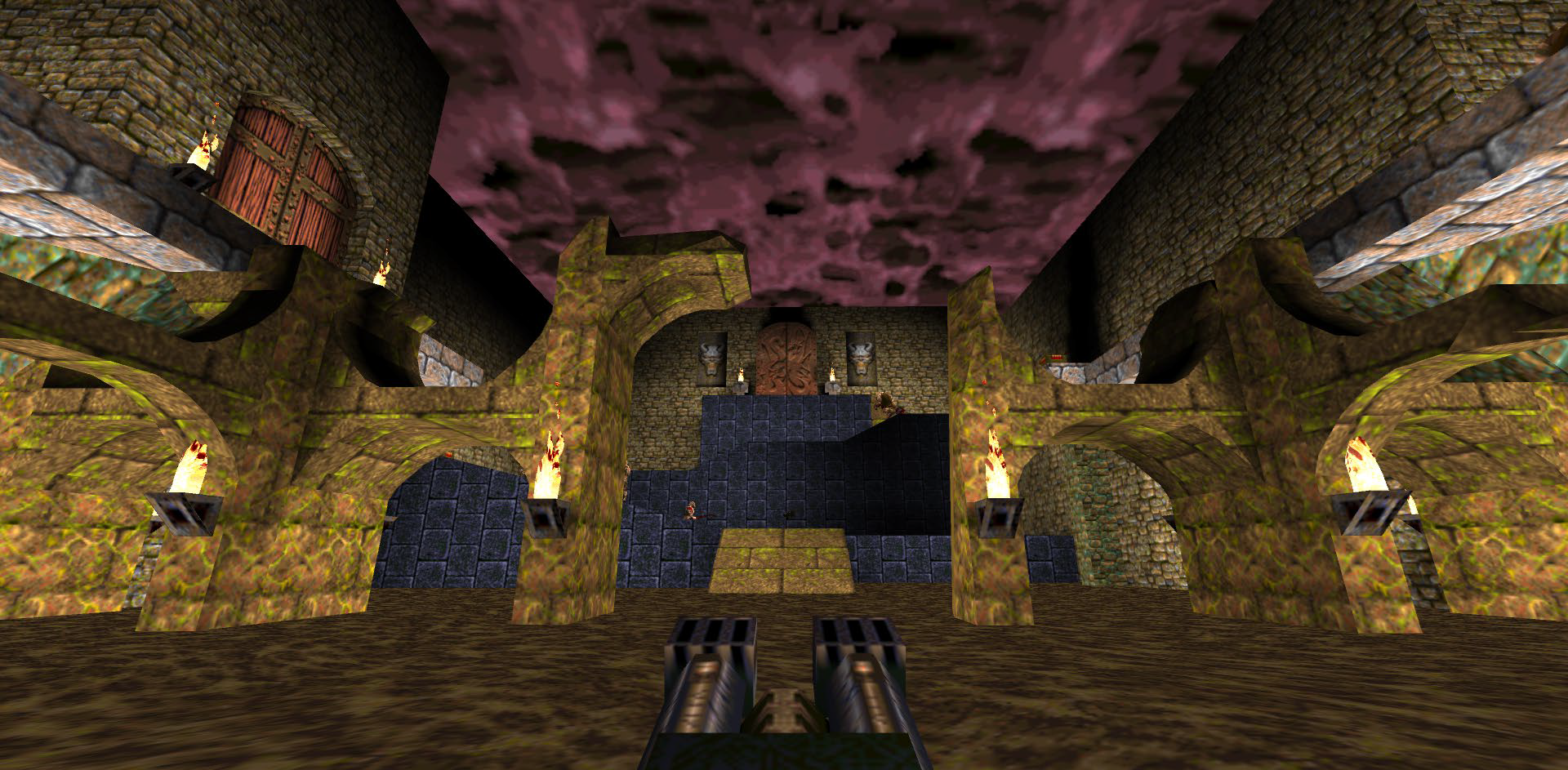
This project is a degree thesis focused on the impact of level design on player navigation and gameplay experience. Level design is more than just creating visually appealing spaces—it plays a crucial role in how players explore, interact, and engage with a game world. This research delves into the psychological, architectural, and artistic techniques that influence player movement, level flow, and overall immersion.
The main goal is to analyze how level structures can subtly guide players through an environment without relying on UI elements or explicit instructions. This includes the use of lighting, environmental storytelling, spatial composition, and visual contrast to direct player attention and decision-making.
To put these theories into practice, I designed and developed a custom Quake map, applying iterative design methods that involved multiple rounds of playtesting and feedback analysis. The map serves as a case study, exploring how different level layouts and mechanics affect player navigation, combat engagement, and exploration patterns.
This thesis aims to provide valuable insights into effective level design strategies, helping developers create environments that feel intuitive, engaging, and rewarding for players.

Key Information
- Thesis Topic: Navigational Flow in Level Design
- Level Editor: Trenchbroom
- Methodology: Iterative level design with structured playtesting and corrections
- Main Focus: How players interpret, navigate, and interact with level structures
- Testing: Multiple playtests with diverse player experience levels
Main Concepts Explored
- Psychology of Navigation: How player attention, cognitive load, and environmental cues affect movement and decision-making.
- Architectural Influence: How level structure, space design, and lighting guide players intuitively.
- Iterative Testing: Creating blockouts, analyzing player behavior, and applying feedback to improve design progressively.
- Gameplay-Driven Design: Balancing challenge, exploration, and combat pacing through environmental storytelling.
- Player Guidance Techniques: Using visual contrast, landmarks, object placement, and enemy encounters to create an intuitive flow.
This study highlights the importance of intentional level design in guiding players naturally without excessive UI elements, instead leveraging spatial layout, lighting, and game mechanics to create a seamless experience.